


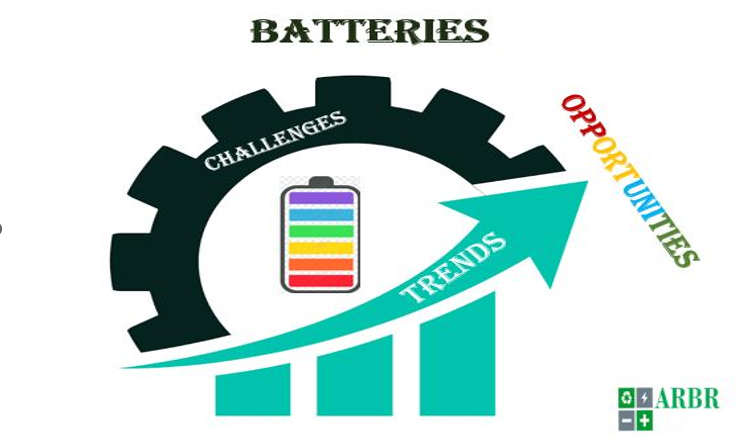
Overview
With the current trend in technological advancement and increasing innovations in the energy sector, it is clear that batteries will revolutionize the market in the coming years. The energy and technology transition, though slow, is taking center stage and this transition can be seen in areas such as electric mobility and the circularity of batteries.
The battery market is currently experiencing significant growth, which is driven by increasing demand for portable electronic devices, electric vehicles, renewable energy storage systems, and the unstoppable demand for consumer electricity. In fact, the global battery market is expected to reach $423.9 billion by 2030 according to Statista Research Department. In Nigeria, the primary battery market is expanding due to the rising need for portable power sources in consumer electronics, medical devices, and industrial equipment. This growth is propelled by the proliferation of electronic gadgets, advancements in battery technology, and the expansion of the healthcare sector. Also, while the use of lead-acid batteries remains prevalent, there’s a growing move towards lithium-ion batteries which is projected to grow significantly between 2025 and 2031, and this is attributed to the increasing adoption of electric vehicles, renewable energy storage systems, and the expansion of consumer electronics. The market is expected to see a rise in demand for various types of lithium-ion batteries, including those with different power capacities and applications.
Batteries and Electric Mobility
As a signatory to the Zero Emission Vehicle (ZEV) Declaration, Nigeria’s policies on ZEVs include a commitment to carbon neutrality by 2060, a plan to increase the use of electric vehicle (EV), and financial incentives for manufacturers. With these policies, a massive increase in the demand for batteries is expected, especially lithium ion batteries, to power electric vehicles.
In terms of global figures, more than 7 million electric cars were sold in the first half of 2024, an increase of nearly 25% over the same period of the previous year (2023), as reported by World Energy Outlook in 2024. Furthermore, according to forecasts by Gartner, Inc., by the end of 2025, 85 million electric vehicles (EVs) for passenger cars, buses, vans and heavy trucks are expected to be on the road around the globe.
Innovation
The regions that are and will continue to feature the most are Asia (China, Japan and South Korea in particular), Europe, the United States and Canada. These regions all play a key role in keeping the battery market active with China as the leader in battery production and consumption, driven by its huge electric vehicle market, while Europe and the United States follow.
Specifically, China has 85-95% of global manufacturing capacity for battery cathode and anode materials, more than 80% of global solar PV manufacturing capacity and more than 75-90% of global cobalt, graphite and rare earth element processing capacity, according to the World Energy Outlook 2024.
Europe, for its part, has passed strict regulations to meet the European Union´s climate targets, as well as earmarked part of its investment in Giga-factories to become less dependent on Asia and all the production capacity and materials of the aforementioned.
Africa is experiencing a growing trend towards battery manufacturing, primarily driven by its rich reserves of critical minerals like lithium, nickel, manganese, and copper, which could position the continent as a key player in the global battery supply chain, with a focus on developing lithium-ion battery production for electric vehicles and renewable energy storage, particularly in countries like Morocco, South Africa, and Egypt, where significant investments in battery giga-factories are underway.
Meanwhile, Nigeria, is a home to some of the largest lead-acid battery recycling industries in Sub-Saharan Africa with at least ten battery recycling facilities on an industrial scale. These facilities, primarily recover raw materials such as lead, tin, and antimony, which are then reused in battery production either domestically or internationally. Nigeria also, owing to its large lithium ore deposits, is working towards becoming a major player in the global battery industry. The government has approved the establishment of lithium processing plants and plans to manufacture solar panels and electric vehicle batteries.
Challenges
The primary battery market in Nigeria faces challenges such as high production costs and limited access to raw materials. Additionally, there is a lack of technological advancements and infrastructure for large-scale production. The market also suffers from competition from imported batteries.
Furthermore, the battery industry also faces several other challenges, one of which is the search for more accessible and sustainable materials, as dependence on materials such as lithium, cobalt and nickel is very expensive and polluting. To address this dependence, sodium batteries, a more abundant and cheaper material than lithium is being developed, as well as the solid-state batteries. Another hurdle is environmental impacts, particularly given the way waste batteries are disposed of.
As the battery market expands, there’s a growing awareness of the need for responsible waste battery management. Opportunities exists, from the transition to more sustainable raw materials and production processes, to recycling. Therefore, efforts to establish battery recycling infrastructure and promote sustainable waste battery management practices are expected to gain momentum.